Author: punegcchub

  • Hinjawadi IT Park to be Included in Pimpri-Chinchwad Municipal Corporation

    Hinjawadi IT Park to be Included in Pimpri-Chinchwad Municipal Corporation

    In a significant announcement for Pune’s technology and Global Capability Center (GCC) ecosystem, Maharashtra Chief Minister Devendra Fadnavis stated during a TV channel interview that Hinjawadi Rajiv Gandhi Infotech Park will be brought under the jurisdiction of the Pimpri-Chinchwad Municipal Corporation (PCMC).

    If implemented, the move could address several long-standing civic and infrastructure challenges in India’s largest IT hub.

    Key expected benefits:

    • Better planned roads and improved traffic management
    • Enhanced water supply, drainage and solid waste management
    • Stronger action against unauthorized constructions and encroachments
    • Unified civic administration and more efficient governance
    • Faster and improved delivery of essential civic services

    Currently, Hinjawadi is administered by multiple agencies, including the Gram Panchayat, MIDC and PMRDA, often leading to fragmented governance and delays in addressing civic issues.

    For Pune’s rapidly expanding GCC ecosystem, this could be a transformative development. Better infrastructure and unified governance could improve the experience of thousands of professionals while further strengthening Pune’s position as a leading destination for global technology, innovation and GCCs.

    Pune GCC will continue to track this development and share updates as more details emerge.

  • The Shaw Group Expands Pune Presence with Second Office, Strengthening Its Global Operations

    The Shaw Group Expands Pune Presence with Second Office, Strengthening Its Global Operations

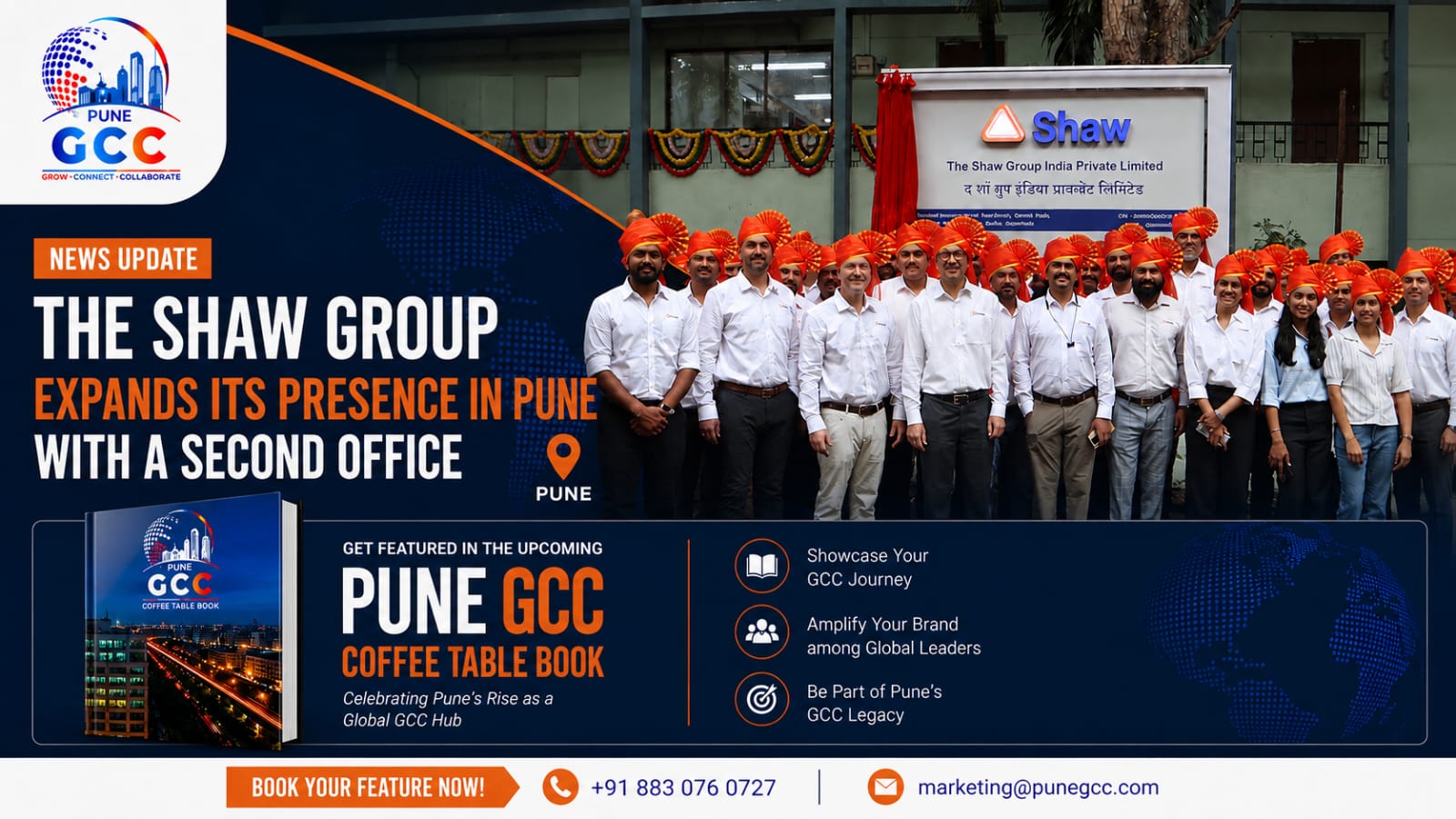
    Pune, India: The Shaw Group has expanded its presence in Pune with the opening of its second office in the city, marking another important milestone in the company’s global growth journey.

    The new office will further strengthen The Shaw Group’s ability to support its clients, enhance collaboration across its international teams, and create additional opportunities for its growing workforce in India.

    The inauguration was led by Matt Rodgers, CEO, The Shaw Group, who traveled to Pune to mark the occasion and engage with the company’s employees. During his visit, Rodgers also hosted a Town Hall with the Pune team, where he shared the organization’s vision for the future, recognized the achievements of its growing workforce, and emphasized the importance of collaboration across The Shaw Group’s global operations.

    The expansion comes as Pune continues to strengthen its position as a leading destination for Global Capability Centres (GCCs), engineering, technology, and global business operations. The Shaw Group’s investment in an additional Pune office reflects the city’s growing importance in supporting global organizations and their evolving operational requirements.

    With its expanding footprint, The Shaw Group is positioned to further leverage Pune’s strong talent ecosystem while strengthening connections between its India operations and global teams.

    The latest expansion adds to the growing momentum of Pune’s GCC ecosystem, as global organizations continue to deepen their presence and build long-term capabilities in the city.

    Pune GCC will continue to track and highlight the city’s growing role as a strategic hub for global enterprises and capability-led growth.

    About The Shaw Group

    The Shaw Group is a global organization supporting clients through its expertise, people, and international operations. Its continued expansion in Pune reflects its commitment to strengthening its global capabilities and creating opportunities for its teams in India.

  • Maharashtra’s GCC Policy 2025 vs IT & ITeS Policy 2023: What More Do GCCs Get?

    Maharashtra’s GCC Policy 2025 vs IT & ITeS Policy 2023: What More Do GCCs Get?

    Pune, September 2026: Maharashtra’s technology landscape is entering a new phase with the state’s Global Capability Centre (GCC) Policy 2025, which introduces a targeted incentive framework for global enterprises establishing or expanding captive operations. While Maharashtra’s IT & ITeS Policy 2023 created a broad baseline for technology enterprises, the GCC policy addresses the distinct capital expenditure, high-tier talent, R&D, and commercial leasing dynamics of Global Capability Centres.

    The critical distinction for corporate leaders is that the GCC Policy 2025 does not replace the 2023 IT & ITeS Policy. Instead, it builds upon that foundational architecture. Eligible GCCs can continue to access established institutional benefits under the 2023 framework while unlocking a specialized suite of incentives scaled specifically to GCC operations. For multinational corporations evaluating Maharashtra—and particularly Pune’s technology corridors—this creates a comprehensive two-tier incentive ecosystem.

    Under the 2023 IT & ITeS Policy, Maharashtra focused on the broader technology sector, covering IT-enabled services, emerging technologies, data centres, and AVGC (Animation, Visual Effects, Gaming, and Comics). Its primary objective was wide-scale employment generation and digital infrastructure development.

    The 2025 GCC Policy narrows its focus strictly to high-value, captive global operations. Underscoring this shift in value, the operational guidelines explicitly exclude third-party Business Process Outsourcing (BPO) units, customer support call centres catering to external clients, and pure-play sales or trading entities. To qualify, operations must be dedicated captive setups driving core capabilities such as artificial intelligence, product engineering, cybersecurity, data analytics, treasury management, and engineering research and development (ER&D).

    Categorisation is determined by Fixed Capital Investment (FCI in plant and machinery) or direct employment, spanning Small, Medium, Large, Mega, and Ultra Mega tiers. Furthermore, setting up a new GCC requires dedicated, separate premises; simple internal seat additions within an existing facility do not qualify as a new establishment.

    A core fiscal enhancement in the 2025 policy is the GCC-specific capital subsidy, offering up to 20% of eligible investment in plant and machinery, disbursed across five equal annual instalments:

    • Small GCC: Capped at ₹10 crore
    • Medium GCC: Capped at ₹20 crore
    • Large GCC: Capped at ₹50 crore
    • Mega GCC: Capped at ₹100 crore (with customised packages evaluated for Ultra Mega projects)

    Recognising that most GCCs establish operations in leased Grade-A commercial office space rather than building owned campuses, the policy introduces an alternative: eligible GCCs must choose between the capital subsidy or rental assistance—the two benefits are mutually exclusive.

    For Pune (classified alongside Mumbai under Zone I), eligible new GCCs can claim rental assistance of 10% of eligible actual rent (or Ready Reckoner rates, whichever is lower) for up to five years. Annual caps scale from ₹1 crore for Small GCCs up to ₹4 crore for Mega GCCs. This gives companies moving into Pune’s key enterprise micro-markets substantial operational expenditure relief without requiring heavy real estate capital commitments.

    Unlike earlier frameworks that focused on basic technical training reimbursements, the 2025 policy directly incentivises advanced talent acquisition.

    In Zone I, eligible GCCs can receive a salary subsidy equivalent to 40% of the salary component exceeding ₹1 lakh per month, capped at ₹50,000 per month per employee for up to three years. To maintain targeted fiscal deployment, this subsidy is subject to an annual cap of up to 100 employees per GCC unit. For centres hiring specialized data scientists, machine learning engineers, and system architects, this provides meaningful payroll offsets.

    Where a GCC meets prescribed diversity thresholds (such as maintaining a 50% workforce composition of women and persons with disabilities), the subsidy rate increases by an additional 10%, scaling to 50% in Zone I with an elevated cap of ₹60,000 per employee per month. GCCs can also access stipend support of up to ₹10,000 per month per intern under applicable state skill-development schemes, accelerating early-career talent pipelines.

    Research and development incentives are also significantly more concrete under the 2025 framework. Eligible GCCs allocating at least 2% of their FCI toward R&D can claim a 25% reimbursement on eligible operational R&D expenditure—up to ₹50 lakh annually, capped at ₹2 crore over four years. Importantly, GCCs undertaking joint research initiatives with recognized universities or higher education institutions within Maharashtra receive an additional 10% subsidy bonus. For Pune, home to a dense network of premier engineering, computational, and research institutes, this creates a direct incentive to build institutional industry-academia research hubs.

    Operating cost measures also include:

    • Power tariff subsidies of ₹1 per unit in Zone I for five years (subject to an annual ceiling of ₹20 lakh).
    • Electricity-duty exemption for 10 years.
    • 50% statutory fee reimbursement for domestic and international patent filings (capped at ₹50 lakh per unit).

    To ensure long-term value creation, the operational guidelines require beneficiary GCCs to maintain a mandatory operative period of at least 10 years from the issuance of their first Registration Certificate, backed by annual operational and statutory compliance filings. Existing centres expanding in Pune can also qualify by demonstrating a minimum 25% net increase in Gross Fixed Capital Investment alongside a 25% net addition in permanent non-supervisory headcount.

    The specialized GCC incentives operate alongside the overarching structural protections of the IT & ITeS Policy 2023. Eligible GCCs retain access to:

    • Stamp duty concessions and exemptions based on zone and IT park categorization.
    • Additional Floor Space Index (FSI) for designated parks.
    • Open access power procurement and industrial property tax parity.
    • Permissibility for 24×7×365 continuous operations under formal industry status.
    • Dedicated statutory facilitation via MAITRI’s single-window clearance cell.

    Maharashtra’s target is to attract 400 new GCCs and create four lakh high-skilled jobs through 2030. The structural divergence between the two policies is distinct: the IT & ITeS Policy 2023 built the foundational infrastructure for technology services, while the GCC Policy 2025 creates targeted financial mechanisms to attract global corporate headquarters, deep-tech engineering, and strategic decision-making centers. For Pune, this two-tier model positions the city not merely as a delivery outpost, but as India’s primary locus for high-value captive innovation.


  • Litmos Opens New Technology Centre in Pune, Strengthening Its Global Engineering Capabilities

    Litmos Opens New Technology Centre in Pune, Strengthening Its Global Engineering Capabilities

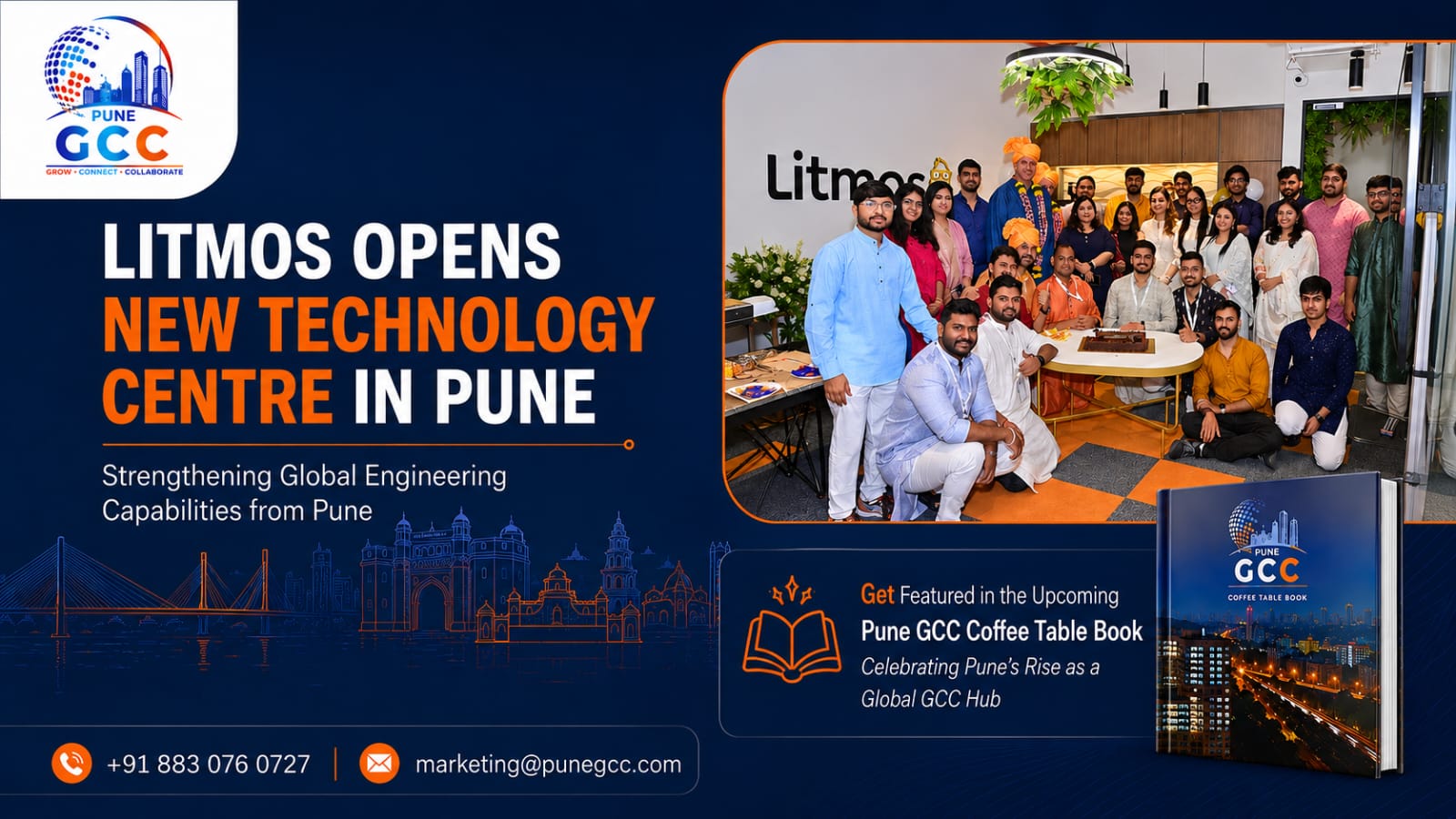
    Pune: Pune’s position as a leading destination for global technology and engineering operations continues to grow, with Litmos, a global learning management and learning acceleration platform, opening a new Technology Centre in the city.

    The new Pune centre marks an important milestone in Litmos’ India journey and will strengthen the company’s global engineering capabilities while enabling it to access Pune’s established technology ecosystem and highly skilled talent pool.

    The centre was formally inaugurated by Eric Vermillion, CEO; Brian Sobus, CTO; and Sarabjeet Singh, Director, India Operations. The leadership presence underlines the strategic importance of the company’s growing India operations.

    According to Sarabjeet Singh, building the Litmos India presence has been a “One Litmos” effort, involving the creation of the local team, development of its culture and establishment of Pune as a strategic engineering hub for the company.

    Over the past several months, Litmos has focused on bringing together technology talent, building its engineering team and establishing the foundations for its Pune operations. The company sees India as an increasingly important part of its global technology and engineering strategy.

    Litmos operates across 150 countries and serves more than 11,000 organisations globally. The new Pune Technology Centre is expected to contribute to the company’s broader engineering and product development capabilities while fostering collaboration, knowledge-sharing and professional growth.

    Pune’s Growing Role in Global Engineering

    The expansion comes at a time when Pune is attracting increasing interest from global enterprises looking to establish or expand Global Capability Centres (GCCs) and specialised technology operations.

    The city’s combination of experienced engineering talent, a strong technology ecosystem, established infrastructure and access to a growing pool of skilled professionals continues to make it an attractive location for multinational companies.

    Litmos’ decision to establish a Technology Centre in Pune further demonstrates the city’s evolution from a traditional technology delivery location into a strategic centre for engineering, innovation and global capability development.

    As more global companies build specialised teams and leadership capabilities in Pune, the city is strengthening its role in India’s expanding GCC landscape.

    Litmos’ Pune Technology Centre adds another significant global technology operation to this ecosystem, reinforcing Pune’s growing reputation as a destination for high-value engineering and innovation.

  • Michigan-Based AI Engineering Company Altimetrik Opens Its Second Centre in Pune

    Michigan-Based AI Engineering Company Altimetrik Opens Its Second Centre in Pune

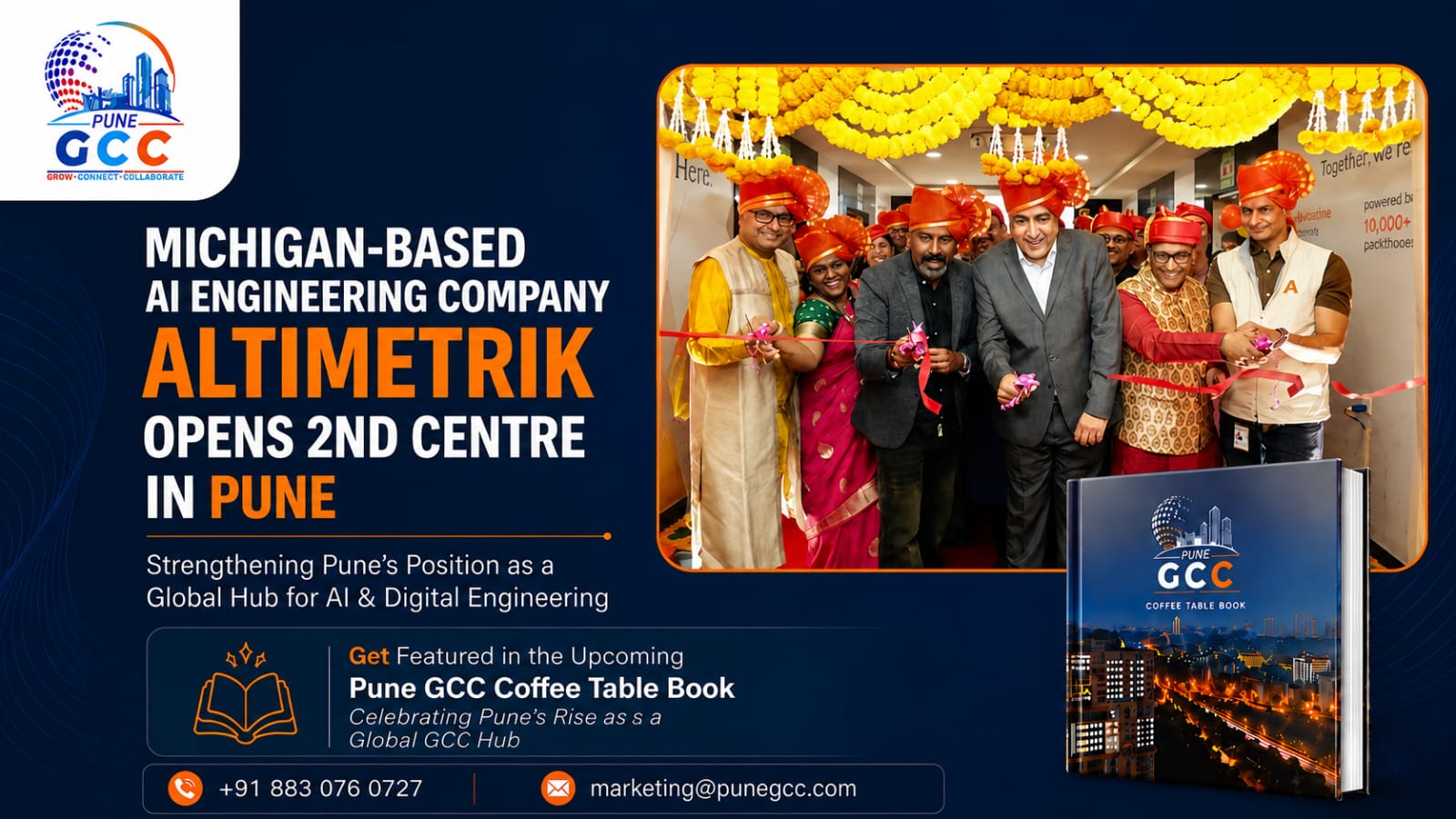
    Pune: Pune’s position as a leading destination for artificial intelligence, digital engineering and Global Capability Centre (GCC) operations continues to strengthen as Altimetrik, a Michigan-based AI engineering company, expands its footprint in the city with the opening of its second centre in Pune.

    Headquartered in Southfield, Michigan, Altimetrik is an AI-native digital engineering company that works with global enterprises to accelerate digital transformation, modernise technology platforms and develop AI-powered solutions.

    The company’s expansion in Pune highlights the growing importance of the city within its global engineering and technology operations. With enterprises increasingly investing in Artificial Intelligence, Generative AI, data engineering, cloud technologies, digital platforms and automation, Pune has emerged as a strategic location for companies building advanced technology and engineering capabilities.

    Altimetrik has been expanding its focus on enterprise AI as organisations move beyond experimentation towards deploying AI solutions at scale. The company has developed capabilities across AI engineering, data and analytics, cloud, product engineering and digital transformation, supporting enterprises across multiple industries.

    The company has also been strengthening its AI ecosystem through partnerships with leading technology companies, including OpenAI, Google Cloud, Anthropic, Snowflake and Databricks. Its AI-focused initiatives are aimed at helping organisations accelerate the adoption of AI and integrate intelligent technologies into their core business operations.

    Altimetrik was recently named an OpenAI Advanced Partner, reflecting its growing focus on enterprise AI engineering and the deployment of AI solutions in production environments.

    Pune Strengthens Its Position as an AI and Engineering Hub

    The opening of Altimetrik’s second centre adds to the growing list of global technology companies expanding their engineering, technology and innovation operations in Pune.

    The city has established itself as one of India’s leading technology ecosystems, supported by a strong talent pool, established IT infrastructure, a large presence of multinational corporations and a rapidly expanding GCC ecosystem.

    Pune is increasingly attracting organisations looking to establish or expand centres focused not only on traditional IT services but also on AI engineering, software product development, cybersecurity, data science, cloud computing, digital transformation and global R&D.

    Altimetrik’s latest expansion is therefore significant in the broader context of Pune’s GCC growth. The company’s focus on AI and digital engineering aligns closely with the changing nature of GCCs in the city, where global organisations are increasingly moving towards higher-value technology, innovation and product-led functions.

    Growing Global Technology Footprint

    Altimetrik’s second Pune centre is expected to further support its engineering and technology capabilities while strengthening its ability to serve global customers from India.

    The expansion also reflects the continued confidence of international technology companies in Pune as a location for building specialised technology teams and accessing skilled engineering talent.

    As global enterprises accelerate their investments in AI and digital transformation, Pune is increasingly positioning itself as a key global hub for AI engineering, technology innovation and next-generation GCC operations.

    The latest expansion by Altimetrik adds another major technology company to Pune’s growing ecosystem and further reinforces the city’s emergence as an important destination for global engineering and innovation.

    Pune GCC will continue to track major GCC expansions, investments, leadership developments and technology announcements shaping Pune’s global capability ecosystem.

  • TIAA Global Capabilities Leases 2.56 Lakh Sq. Ft. in Pune for ₹320 Crore

    TIAA Global Capabilities Leases 2.56 Lakh Sq. Ft. in Pune for ₹320 Crore

    Pune: Pune’s position as a leading destination for Global Capability Centres (GCCs) continues to strengthen, with TIAA Global Capabilities leasing approximately 2.56 lakh square feet of office space at Panchshil Vantage in Wagholi for a 10-year term. The contractual rent over the lease period is estimated at around ₹320 crore, according to lease-related documents accessed by Business Standard through real estate data analytics firm Propstack.

    TIAA Global Capabilities, the Indian subsidiary and strategic global delivery centre of TIAA (Teachers Insurance and Annuity Association of America), has taken the office space from P-one Infrastructure for carrying out its business operations.

    The lease has been signed at a monthly rental of ₹92 per square foot, translating into an initial monthly rent of approximately ₹2.35 crore. The agreement includes a 15 per cent rent escalation every three years, while the security deposit stands at around ₹14.11 crore.

    Expansion to Take Place in Two Phases

    TIAA Global Capabilities will occupy the newly leased space in two phases. The first tranche of approximately 1.88 lakh square feet, spread across floors 5 to 7, is scheduled to be taken over from December 2026. A further 67,717 square feet on the eighth floor is expected to be occupied from June 2027.

    The expansion comes as TIAA Global Capabilities continues to scale its operations in India. The company said that 2026 marks 10 years of TIAA Global Capabilities’ presence in India, and that the latest expansion reflects the continued growth and strategic importance of its India operations.

    The company is scaling its footprint as an AI-powered Global Capability Centre, supporting growing demand across technology transformation, artificial intelligence and emerging technologies, data and analytics, risk management and client experience functions.

    According to TIAA Global Capabilities, the additional space in Pune will enable it to consolidate teams and further strengthen the range of capabilities being developed in the city, while providing scope for future growth as its operations evolve.

    Pune Strengthens Its Role as a GCC Hub

    TIAA established its Global Capability Centre in India in 2016. The centre supports TIAA’s technology, operations and business-facing functions and provides global technology, operations and shared services to the company’s businesses and associates.

    TIAA Global Capabilities currently has operations in Mumbai and Pune, with around 3,500 associates across the two locations.

    The company’s latest Pune expansion adds to a growing list of large-scale GCC and enterprise office commitments in the city. The demand is being supported by Pune’s established technology talent pool, engineering capabilities, business services ecosystem and expanding commercial real estate infrastructure.

    Pune’s office market has also recorded strong growth in 2026. According to Savills India, the city recorded its highest half-yearly gross office absorption in the past decade at 6.4 million square feet during the first half of calendar year 2026, representing a 56 per cent year-on-year increase.

    Pune emerged as India’s second-largest office market after Bengaluru during the period. Office leasing activity was driven primarily by IT-BPM, flexible workspaces, and engineering and manufacturing companies, with engineering and manufacturing replacing BFSI among the city’s top three demand drivers.

    A Positive Signal for Pune’s GCC Ecosystem

    The TIAA expansion is significant not only because of the size and value of the lease, but also because of the nature of the capabilities being developed in Pune. The company’s focus on artificial intelligence, data and analytics, technology transformation, risk management and client experience reflects the continued evolution of Pune’s GCC ecosystem from traditional shared services towards higher-value, technology-led global functions.

    With global enterprises increasingly consolidating technology, analytics, operations and business functions in India, Pune is emerging as an important location for organisations looking to build and scale multidisciplinary global capability teams.

    TIAA’s latest commitment therefore reinforces Pune’s growing importance as a strategic GCC destination and highlights the city’s ability to support long-term expansion by global financial services and technology-driven organisations.

  • Hinjawadi Metro: 5 IT Firms Asked to Build Footbridges Connecting Offices to Metro Stations

    Hinjawadi Metro: 5 IT Firms Asked to Build Footbridges Connecting Offices to Metro Stations

    PUNE, August 29, 2026: Pune’s Hinjawadi IT and GCC ecosystem is set to receive a major last-mile connectivity boost, with the Maharashtra Industrial Development Corporation (MIDC) and Pune IT City Metro Rail Limited (PITCMRL) approaching five large IT companies to develop dedicated foot overbridges (FOBs) connecting their office campuses directly with nearby Metro stations.

    The initiative comes as the Hinjawadi Metro corridor is expected to partially open next month, with authorities looking to strengthen pedestrian connectivity between major corporate campuses and the new mass-transit network. The proposed footbridges are expected to improve pedestrian safety, reduce disruption on busy roads and make daily commuting more convenient for thousands of employees working in the Hinjawadi IT hub.

    Five IT Campuses Under Consideration

    The five identified IT campuses collectively have a workforce of nearly 90,000 employees, underlining the potential scale of the proposed infrastructure initiative.

    Under the proposed arrangement, MIDC will make available the land required for the bridge support structures, while the respective IT companies will finance and execute the construction of the foot overbridges.

    According to MIDC Executive Engineer RG Totla, two companies have already expressed their willingness to undertake the projects and have received the necessary approvals.

    The two proposed footbridges will provide direct pedestrian access from corporate campuses in Hinjawadi Phase 2 to the MIDC Circle, Hinjawadi Circle 1 and Hinjawadi Circle 2 Metro stations. These campuses together employ approximately 55,000 people, making the proposed connections particularly significant for daily employee movement.

    Discussions Underway With Three More Companies

    Authorities are also in discussions with three additional IT companies to develop similar pedestrian connections to Metro stations around Maan, Shree Shiv Chhatrapati Shivaji Maharaj Chowk, Hinjawadi and Hinjawadi Circle 1.

    These establishments have an estimated combined workforce of around 32,000 employees.

    MIDC officials have indicated that discussions are currently underway and expressed hope that the remaining companies will also come forward to support the proposed pedestrian infrastructure.

    A Strategic Move for Pune’s GCC Ecosystem

    The proposed footbridges are particularly important for Pune’s expanding Global Capability Centre (GCC) and technology ecosystem. Hinjawadi has emerged as one of the city’s most important technology and employment clusters, hosting a large concentration of multinational companies, IT services firms and global capability operations.

    Direct pedestrian connections between corporate campuses and Metro stations could help address one of the key challenges associated with large employment hubs: last-mile connectivity.

    For employees travelling to Hinjawadi from different parts of Pune, the Metro could provide a faster and more sustainable alternative to private vehicles. Dedicated footbridges could further improve the effectiveness of the network by allowing commuters to move directly from stations into corporate campuses without having to cross heavily trafficked roads.

    Focus on Pedestrian Safety and Employee Mobility

    The proposed infrastructure is also expected to address concerns over pedestrian safety and traffic movement along roads below the Metro corridor. Hinjawadi experiences significant traffic volumes during peak office hours, when thousands of employees enter and leave corporate campuses simultaneously.

    By creating dedicated pedestrian links, the initiative could reduce the interaction between pedestrians and road traffic while providing a safer route for employees accessing Metro services.

    The proposal has already received a positive response from commuters and local residents, particularly those concerned about pedestrian movement and traffic congestion in the Hinjawadi area.

    Corporate Participation in Urban Infrastructure

    The Hinjawadi footbridge initiative also represents an example of public-private collaboration in urban infrastructure. While government and Metro authorities are facilitating the required land and approvals, participating companies will take responsibility for financing and executing the pedestrian infrastructure.

    Such a model could become increasingly relevant as Pune’s major employment centres expand and the city looks to integrate large corporate campuses with public transportation networks.

    With thousands of employees concentrated across Hinjawadi’s IT and GCC campuses, improved integration between Metro stations, corporate offices and pedestrian infrastructure could play an important role in making the region more accessible, sustainable and employee-friendly.

    As the Hinjawadi Metro corridor moves closer to partial operations, the proposed footbridges could become an important component of Pune’s broader strategy to connect its growing technology ecosystem with modern mass-transit infrastructure.

  • Motherson Electro Components Begins Production at New ₹94 Crore Pune Plant

    Motherson Electro Components Begins Production at New ₹94 Crore Pune Plant

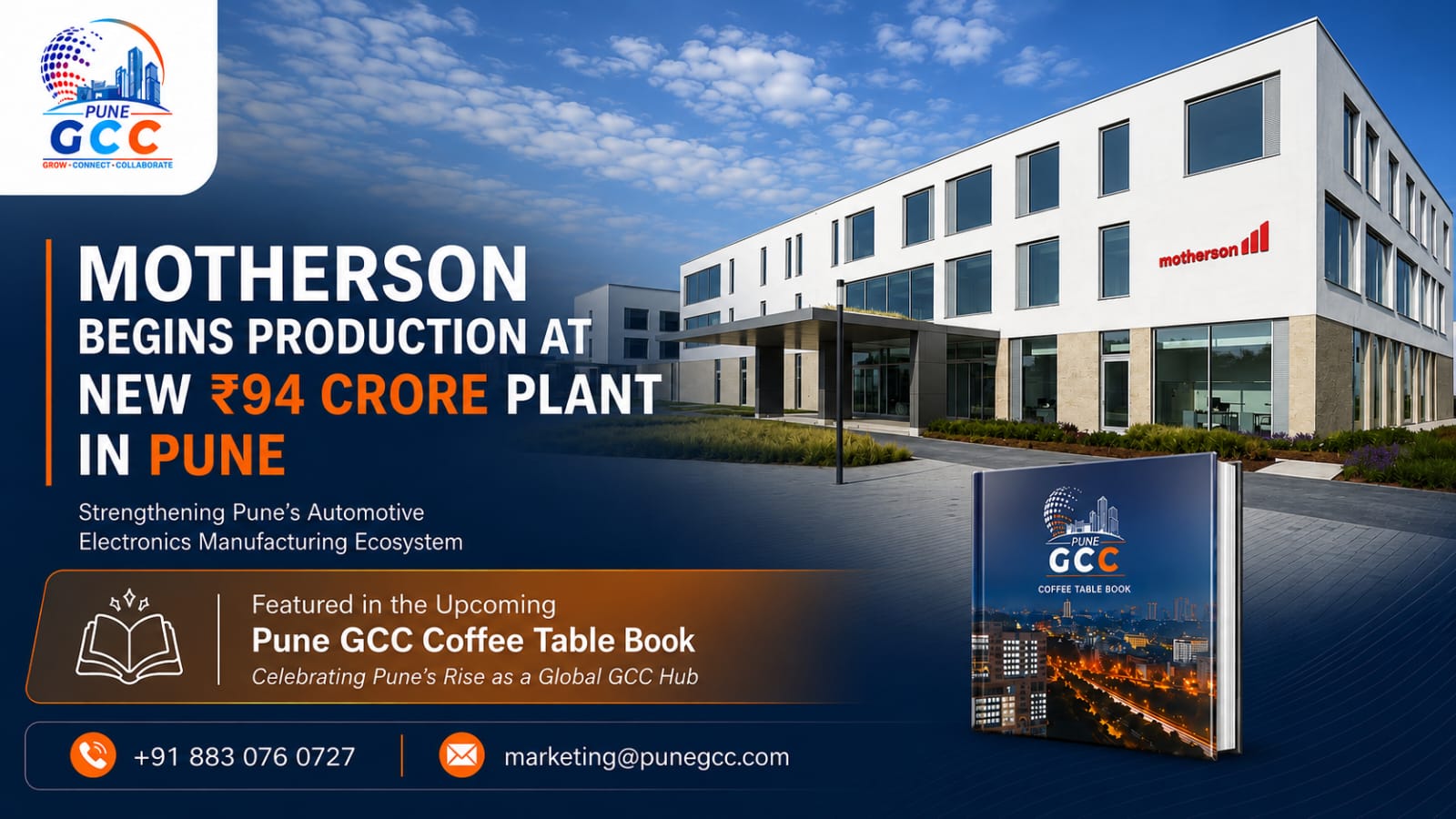
    Pune strengthens its position as a key automotive electronics and advanced manufacturing hub as Motherson Electro Components Limited (MECL) commences commercial production at a new greenfield facility in the city.

    Samvardhana Motherson Group has announced the commencement of commercial production at its new electronics manufacturing facility in Pune, Maharashtra, through its subsidiary Motherson Electro Components Limited (MECL).

    The new facility represents an investment of approximately ₹94 crore and adds dedicated Electronics Manufacturing Services (EMS) capabilities to Motherson’s Lighting and Electronics vertical. The plant will manufacture Printed Circuit Board Assemblies (PCBAs), Electronic Control Units (ECUs) and other automotive electronic components.

    Initial capacity of 1.5 million units annually

    The Pune facility has commenced operations with an initial installed capacity of approximately 1.5 million units per year. According to the company, the facility has been designed with provisions to increase production capacity in subsequent phases as demand grows.

    The investment marks another significant addition to Pune’s growing manufacturing ecosystem, particularly in areas where automotive engineering is increasingly converging with electronics and digital technologies.

    Strengthening automotive electronics capabilities

    The new plant is expected to strengthen Motherson’s in-house sourcing of critical electronic components across its automotive value chain. The facility received its official consent to operate on August 25, 2026, ahead of the commencement of commercial production.

    The development comes at a time when electronics are becoming increasingly important across the automotive industry, driven by connected vehicles, advanced driver-assistance systems, electric mobility and the growing use of electronic control systems.

    Another boost for Pune’s industrial ecosystem

    Motherson’s ₹94 crore investment further reinforces Pune’s position as one of India’s leading automotive and engineering centres. The city has a well-established ecosystem of automobile manufacturers, component suppliers, engineering companies, technology firms and research capabilities.

    The addition of advanced electronics manufacturing capabilities can further strengthen the region’s transition toward higher-value, technology-intensive manufacturing and create opportunities across the wider automotive supply chain.

    For Pune, investments such as this highlight the city’s continued evolution from a traditional automotive manufacturing base into a broader advanced engineering, electronics and technology hub.

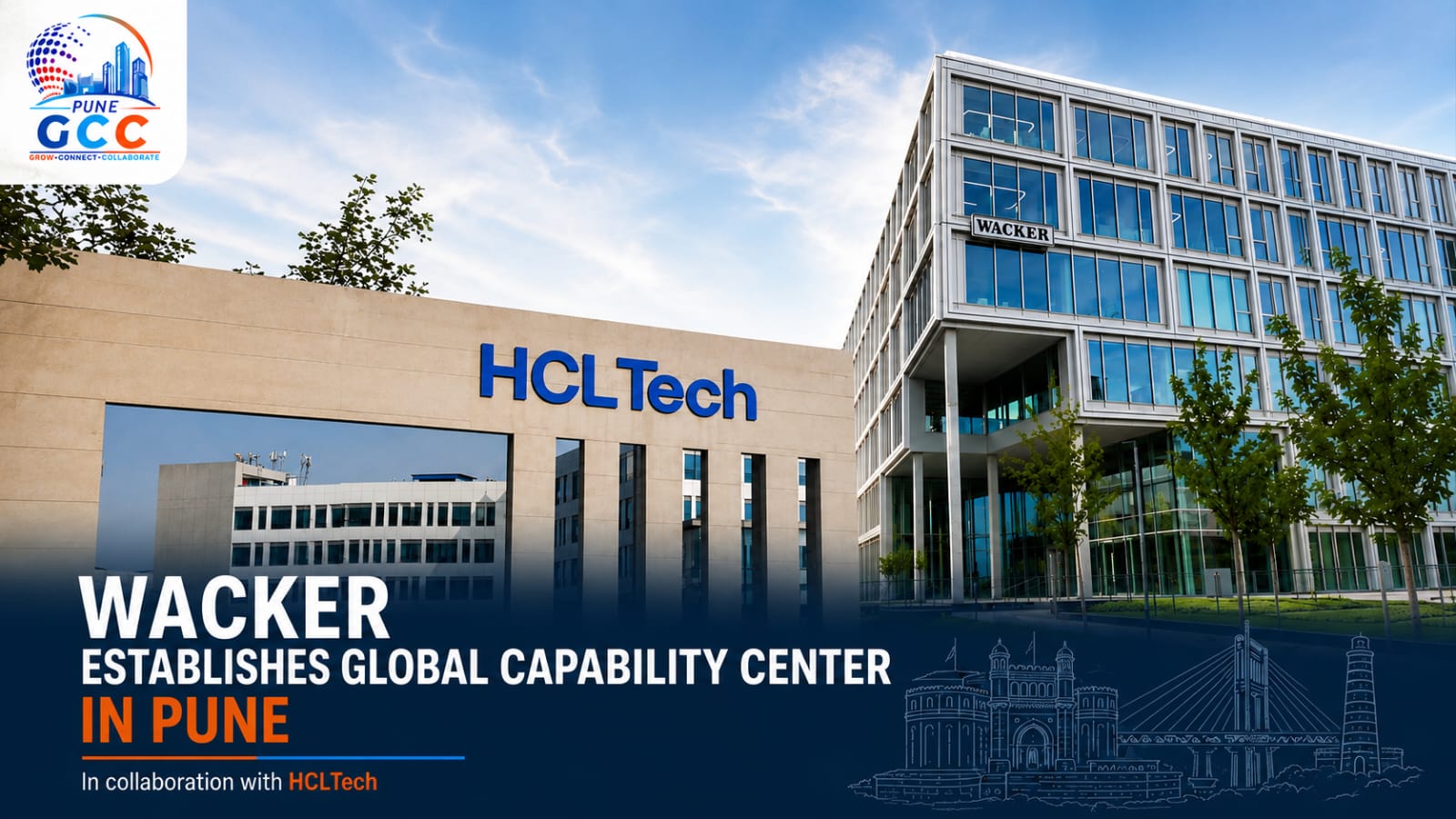
  • WACKER Establishes Global Capability Center in Pune in Collaboration with HCLTech

    WACKER Establishes Global Capability Center in Pune in Collaboration with HCLTech

    German chemicals and biotechnology major WACKER Chemie AG has established a new Global Capability Center (GCC) in Pune in collaboration with HCLTech, further strengthening Pune’s position as a major hub for global technology, engineering and digital operations.

    The new center is being established to support WACKER’s global engineering, IT and digital transformation initiatives. The Pune GCC will provide the company with a flexible and scalable delivery foundation while strengthening its ability to execute technology-led transformation programs across its global operations.

    As part of the collaboration, HCLTech will leverage its capabilities in DevSecOps, automation and digital engineering to help WACKER build a high-performing technology team and establish strong operational and governance frameworks. The partnership is expected to support greater agility, operational efficiency and faster execution of WACKER’s digital modernization initiatives.

    The establishment of the Pune center reflects WACKER’s continued focus on strengthening its global technology capabilities and creating a more resilient operating model. By combining WACKER’s industry expertise with HCLTech’s technology capabilities, the new GCC is positioned to support the company’s evolving digital requirements and long-term growth.

    Pune has emerged as one of India’s leading destinations for Global Capability Centres, supported by its strong pool of engineering and technology talent, established industrial ecosystem and growing presence of multinational companies. WACKER’s decision to establish its GCC in the city adds another prominent global organization to Pune’s expanding GCC landscape.

    The development also highlights the increasing role of Pune-based GCCs in supporting global engineering, technology, automation and digital transformation functions, moving beyond traditional IT service delivery toward strategic global capabilities.

    With WACKER’s new center, Pune continues to attract global organizations looking to build specialized technology and engineering capabilities in India, reinforcing the city’s growing importance in the country’s GCC ecosystem.

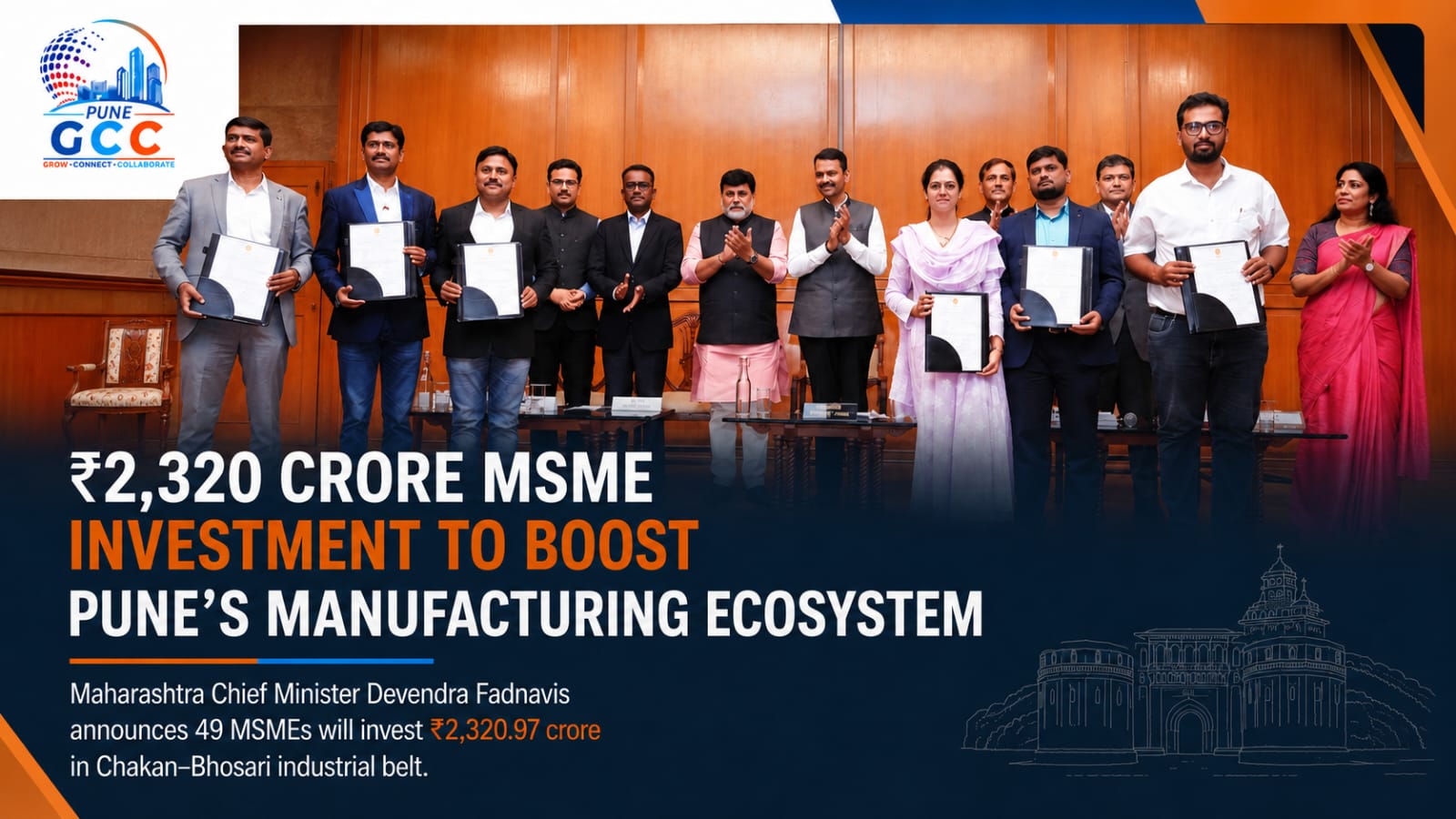
  • ₹2,320 Crore MSME Investment Set to Strengthen Pune’s Manufacturing Ecosystem

    ₹2,320 Crore MSME Investment Set to Strengthen Pune’s Manufacturing Ecosystem

    Pune, Maharashtra: Pune’s Chakan–Bhosari industrial belt is poised for a fresh wave of manufacturing investment, with 49 MSMEs proposing investments worth ₹2,320.97 crore through Memorandums of Understanding (MoUs), according to Maharashtra Chief Minister Devendra Fadnavis.

    The proposed investments are expected to significantly expand manufacturing capacity across the region, generate thousands of employment opportunities and strengthen Pune’s already-established industrial ecosystem. The projects are expected to become operational within the next one to two years.

    Chakan, widely recognised as Pune’s “Motor City,” along with the Pimpri-Chinchwad industrial belt, has emerged as one of the region’s most important manufacturing clusters. The area is home to around 4,000 production units and supports a diverse range of industries, including automotive, engineering, electrical, electronics and logistics.

    The manufacturing ecosystem is further strengthened by the presence of major global and Indian companies such as Tata Motors, Mercedes-Benz, Mahindra and Volkswagen, alongside a large network of MSMEs and ancillary businesses.

    In another significant development, the Maharashtra government is planning to conduct its first MSME Census. The exercise will seek to map key parameters including employment, production, land requirements, labour needs and power requirements. The data is expected to help policymakers better understand the MSME landscape and plan future industrial infrastructure and support initiatives.

    The latest investment proposals highlight the continued expansion of Pune’s manufacturing base beyond its traditional automotive hubs. As new MSMEs add capacity and diversify industrial activity across Chakan, Bhosari and the wider Pune region, the city is strengthening its position as a major manufacturing and industrial destination in India.

    The fresh investment momentum also underlines the growing importance of Pune’s industrial ecosystem in driving manufacturing growth, employment generation and economic development in Maharashtra.