Author: Kailash Maisekar, Idox plc, Country Director – India (Global Capability Center)
I still remember sitting in a review call years ago where the only questions from headquarters were about turnaround time, SLAs, Hiring numbers and cost per employee etc. Nobody asked what we thought of our processes, policies, Architecture let alone the strategy or Roadmap. We were there to execute, thoroughly and quietly, and that was considered success.
I bring this up because that version of the GCC – useful, cheap, invisible, is quickly becoming a thing of the past, at least for the centres that are doing this right. And nowhere is that transformation more visible right now than in Pune.
From “Execute” to Accountable to “Own” Journey
The shift is easy to describe in one sentence: GCCs are moving from executing pre-defined work to owning outcomes. But living through that shift as an operator is a different thing entirely. It means rebuilding how you hire, how you structure teams, and honestly, how you think about your own job.
NASSCOM’s GCC Council captured this transition well in its 2025-27 charter. It describes the model as being at a strategic pivot, advancing from cost and efficiency-led delivery toward owning products, platforms, and end-to-end global business outcomes. Global enterprises now expect their India centres to drive transformation, become Centre of Excellences, create new products and create IP, rather than simply execute instructions. That’s not aspirational language for us anymore. It’s the actual mandate.
Newer and Mid-market GCCs are now being built specifically to help clients move past cost arbitrage, with the real focus on deep domain capability and embedding AI into delivery at scale – not on being a cheaper version of the same old work.
The City Is Doing Its Part
I’d be underselling the story if I didn’t acknowledge how much of this is being enabled from outside our own four walls. Maharashtra’s government has made no secret of wanting Pune to lead this shift. Chief Minister Devendra Fadnavis has said the city is on track to become one of India’s premier hubs for deep tech and global capability centres, positioning Pune, in his words, as the country’s “growth engine” through 2030. That’s not just a speech line. It’s showing up in elevated corridor projects, connectivity investment, and a genuine effort to fix the city’s chronic congestion so it can support the scale ahead.
On the policy side, Industries Minister Uday Samant has been equally direct about the state’s intent. As he put it, “Policies like animation, visual effects, gaming, comics, Global Capability Centre (GCC), bamboo, leather, aerospace, electronics are being implemented in the state” – part of a dozen new sector-specific policies backed by record MoU commitments signed at Davos and other global forums.
When a state government treats your sector i.e. GCC as a named priority rather than an afterthought, it changes what’s possible on the ground. It gives operators like me a foundation to build senior teams here rather than fly work elsewhere the moment costs tick up.
Pune as a HUB for GCCs
Pune is home to a diverse set of GCCs. Right from Automotive, Healthcare, BFSI, Renewable Energy, Engineering, Data Centre to AI, Cloud and software development.
According to AMCHAM report “Pune has emerged as India’s premier high-tech hub, commanding a 14% share of the nation’s Global Capability Centres (GCCs) and expanding at a 9.4% compound annual growth rate. Driven by U.S. multinational investment, the city is shifting from backend operations to advanced R&D, with over 500 centres projected to rise to 680 by 2030, solidifying its role in global tech strategy.”
Some of the examples include:
TCC concept Limited’s data centre subsidiary, NES is planning a 60 MW data-centre campus in Pune, at a time when demand for computing infrastructure is growing rapidly across India. The company already operates a 4 MW facility in Pune and is targeting 100 MW of total capacity over the medium term.
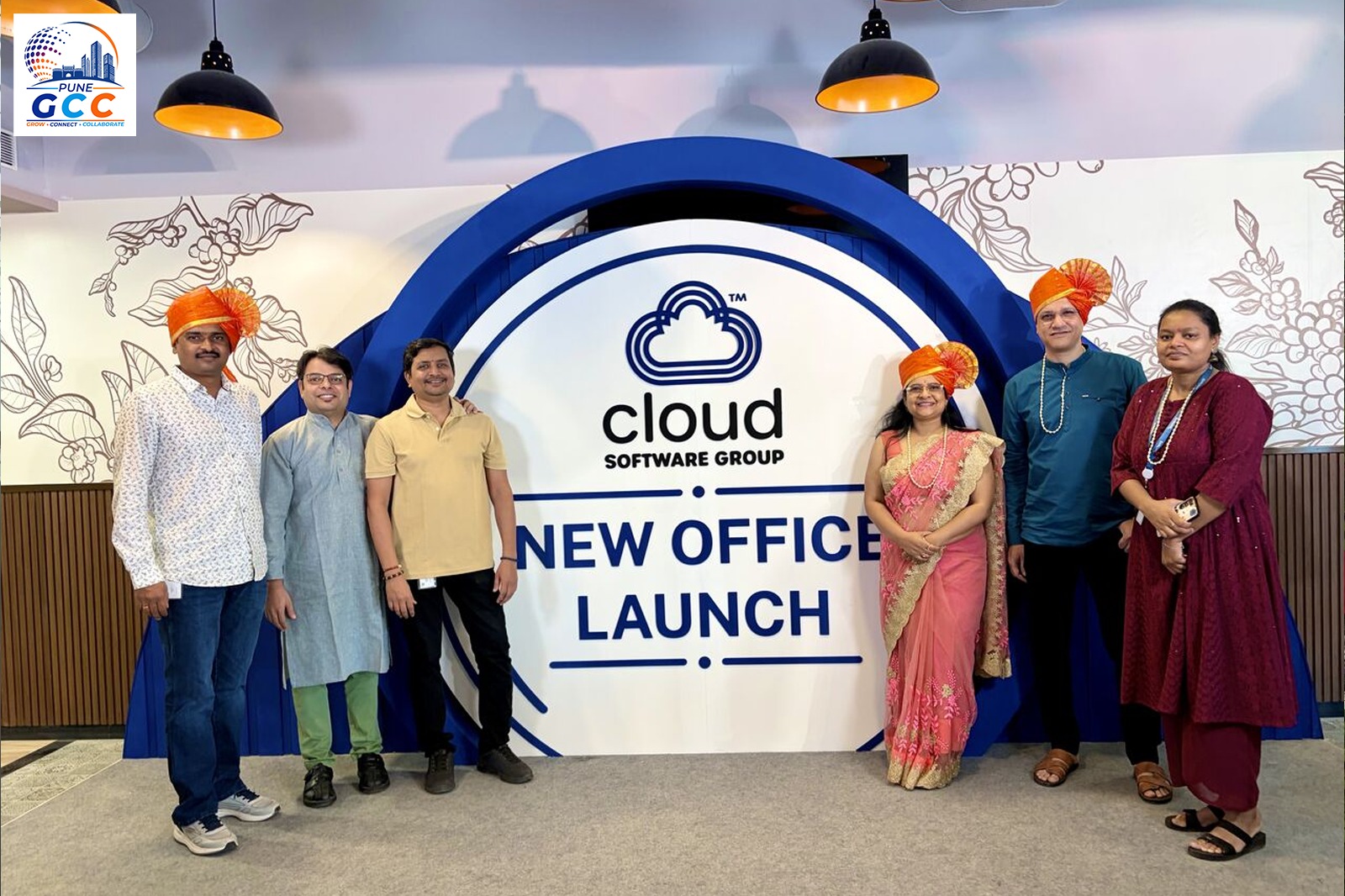
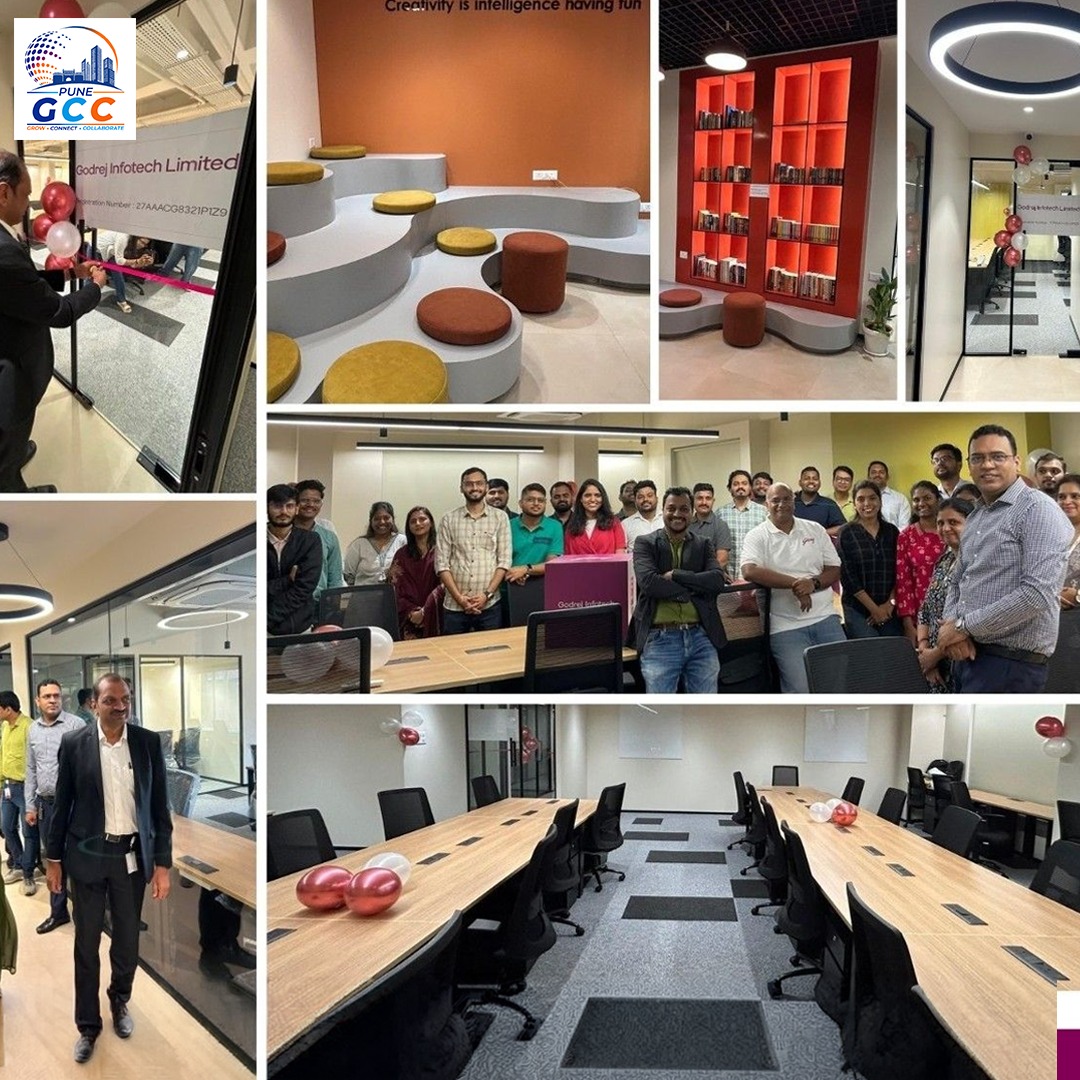
Idox Plc., a UK based Government Technology Company set up it’s GCC in Pune for Engineering, AI, Cloud, Data Centre, Infra and Security. With 2 centres in Pune & Mumbai, they are now looking to consolidate and expand into Pune to become large GCC employing around 500+ people.
PUMA Group is setting up a new Global Capability Centre (GCC) TechHub in Pune to strengthen its global digital engineering capabilities. “The centre will build a world-class direct-to-consumer engineering organisation, developing digital products and platforms that power PUMA’s retail and e-commerce operations worldwide, with a focus on AI, cloud-native technologies, product engineering, and customer-centric digital experiences.” – GCC MarketWatch
BFSI Sector – Pune is home to 9 out 10 large Banking and Financial sector companies in the world such as Barclays, MasterCard, Visa, BNY, Deutch Bank and Citi Bank employing over 30,000 people and delivering Technology & Engineering, Data & Analytics, Risk & Finance, AI & Digital Solutions, Compliance & Controls
What I Tell My Own Team
To become a strategic value centre, we’ve stopped measuring success purely by delivery metrics, and I try to get my leads to think the same way. The real question I ask is: if headquarters had an ambiguous, high-stakes problem tomorrow, not a defined task, but a genuinely open question – would they bring it to us? That’s a very different bar than “did we hit the SLA.”
Getting there requires being honest about which parts of the operation are still doing commoditised work and which have the potential to become value creator. Industry data backs up why these matters, analysts have flagged that a large share of India’s GCCs remain sub-scale, doing easily replaceable work that survives purely on cost, without creating recycle assets or real ownership over engineering, product, and P&L. That’s a warning worth taking seriously, especially as AI starts doing more of the commoditised work faster and cheaper than any offshore team ever could.
The way out isn’t complicated to describe, even if it’s hard to execute: build people who understand the business as deeply as the people who run it from headquarters, and give them real decision rights. Then let AI absorb the repetitive layer underneath, so your best talent spends its time on judgement calls.
A City Worth Betting On
Pune has the ingredients most cities would kill for. A strong engineering talent base, a state government actively investing in the sector, and a growing number of GCCs willing to do the harder, slower work of building strategic capability instead of chasing the next cost-saving headcount target.
“Pune’s 30 public and private universities produce 90,000 STEM grads a year. Pune boasts 27 National Labs, 5 Innovation Hubs, leads in merchandise exports across 800 districts, has 1,200 defence manufacturing units, and vibrant ecosystems of startups, automotive manufacturing, financial IT services and over 560 GCCs” – Sachin Kulkarni, Fiserv
All GCCs not there yet, all at once. But the direction is unmistakable, and for those of us who remember the “just execute quietly” era, it’s a genuinely exciting one to be building through.